What is an uncrewed surface vehicle (USV)? A complete guide
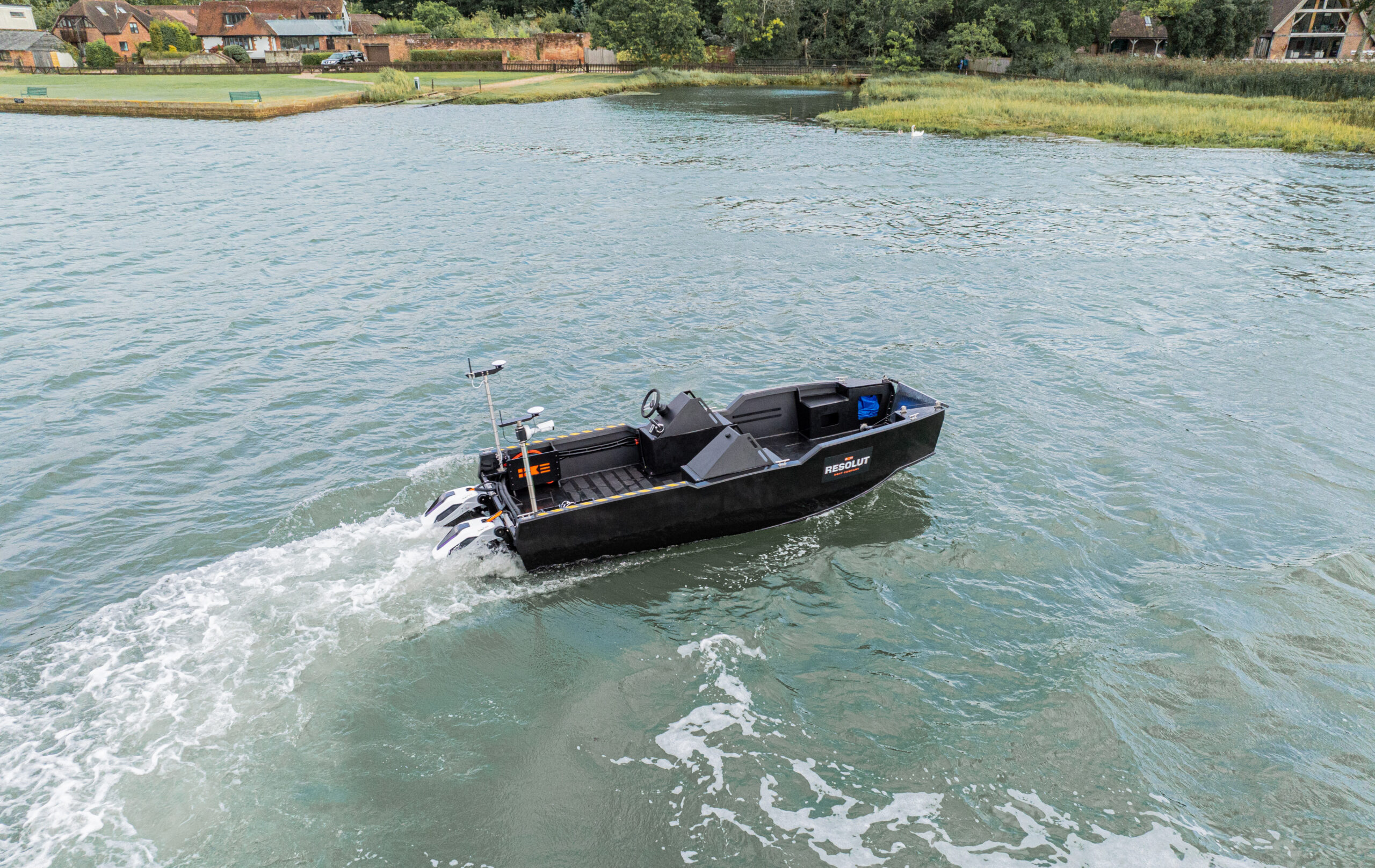
An uncrewed surface vessel (USV) is a boat or watercraft that operates without a crew on board. USVs can be controlled remotely by an operator, navigate autonomously using software and sensors, or use a combination of both approaches.
Procurement programmes are referencing them. Naval forces are deploying them. Survey companies are replacing traditional crewed vessels with them. Here’s what you need to know.
The basic definition
A USV operates on the water’s surface without a crew: controlled remotely from a shore station or command vessel, following pre-programmed waypoints autonomously, or switching between the two depending on the mission. The term is used interchangeably with several others:
- Unmanned surface vehicle – the older, more widely used term in defence procurement.
- Autonomous surface vessel (ASV) – though this implies full autonomy, which many USVs don’t yet have.
- Maritime Autonomous Surface Ship (MASS) – the regulatory term used by the International Maritime Organisation (IMO), typically for larger commercial vessels.
- Marine drone or maritime drone – common in media coverage, though rarely used by engineers.
- Remotely Operated Vehicle (ROV) – an underwater robot controlled from a vessel or shore, used for inspection, maintenance, repair, and subsea operations.
At RAD, we work with the full range, from small tactical platforms to open ocean survey vessels. The one constant: no human operator is physically on board while the vessel is underway.
How does a USV actually work?
A USV is more than a boat with a motor and GPS. It requires several integrated systems working together:
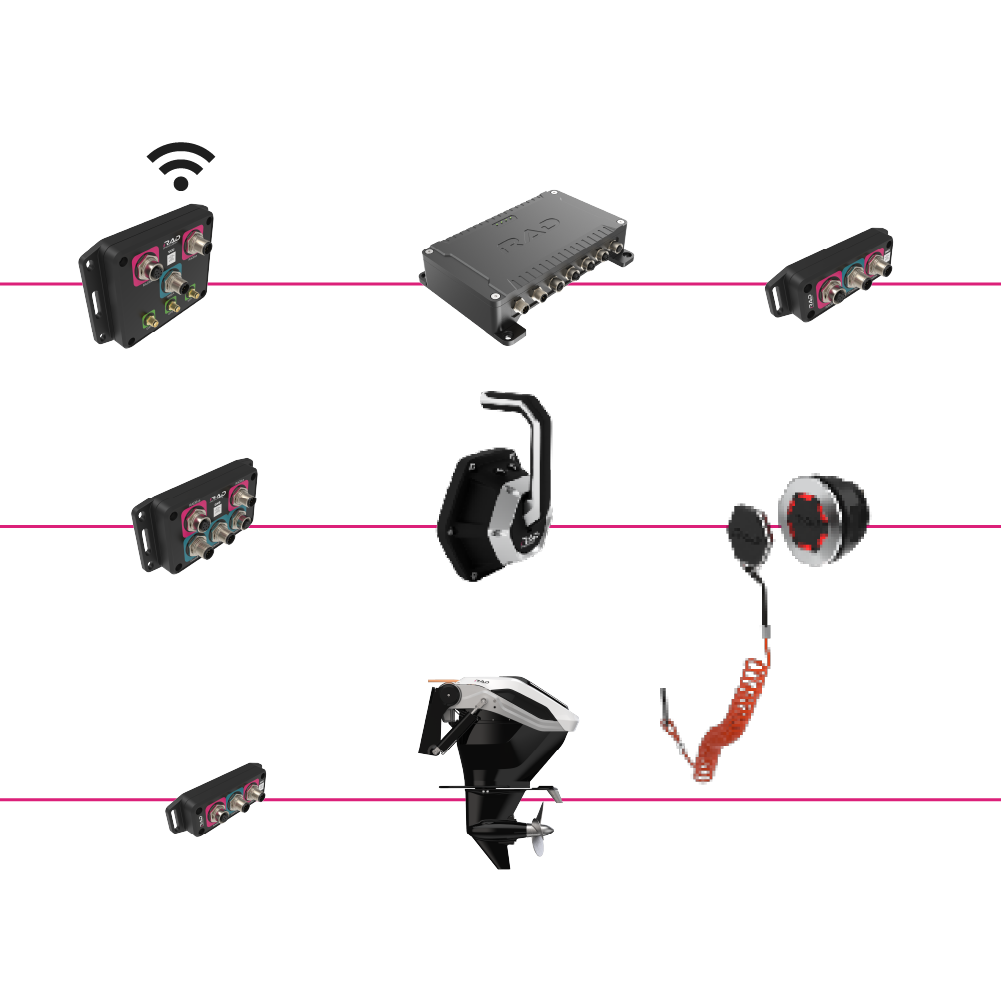
- Onboard control – the vessel systems architecture connecting propulsion, power, sensors, payloads and comms through a common digital infrastructure.
- Navigation and positioning – uses GPS to determine location and direction, with backup systems that keep it on track when GPS signals are unavailable, and sensors that help detect and avoid obstacles.
- Communications – data link to shore or command vessel; extended range deployments increasingly use Starlink satellite comms.
- Mission payloads – sonar, cameras, sampling equipment, integrated through open interfaces alongside navigation by the autonomy layer.
- Propulsion – electric, diesel, hybrid, petrol or hydrogen depending on endurance, acoustic signature, and environmental requirements.
RAD Axon – open vessel systems architecture
RAD Axon is an open architecture system for autonomous and remotely operated vessels. By separating vessel systems from autonomy and mission software, RAD Axon connects propulsion, power, machinery, sensors, payloads and communications through a common digital infrastructure – delivering monitoring, control, automation and data services across the vessel.
Open interfaces allow autonomy providers, mission systems and third-party applications to integrate without requiring direct access to underlying vessel hardware. Builders can develop and reuse common vessel architectures. Autonomy providers integrate through standard interfaces. Operators can upgrade capabilities throughout the vessel’s life without being tied to a single supplier.
RAD Axon enables USV builders to build faster, autonomy providers to integrate easier, and operators to retain freedom of choice throughout the life of their fleet.
What are USVs used for?
The range of applications is broad and growing fast. The most established use cases today:
- Defence and security – supports tasks such as mine detection, coastal monitoring, and working alongside crewed vessels. Can carry out routine, hazardous, or high-risk missions without putting people in danger.
- Hydrographic survey – seabed mapping, ocean condition monitoring, water sampling, long, repetitive missions in remote locations. USVs can remain at sea for days collecting continuous data at a fraction of crewed vessel costs.
- Environmental monitoring – water quality, habitat surveys, marine mammal and fisheries tracking, repeatable data collection without the cost or carbon footprint of crewed operations.
- Inspection – inspection, maintenance and repair of offshore wind farms, oil and gas platforms, and subsea pipelines, often combined with ROV deployment from the USV.
- Port and coastal security – continuous unmanned patrol of large water areas, responding to alerts and streaming live video without requiring crew on the water at all times.
- Search and rescue support – rapid deployment to carry equipment, extend search coverage, or operate in conditions too dangerous for immediate crewed response.
What makes a good USV control system?
The hull and propulsion are well-established areas of marine engineering. The main challenge, and where the key differentiation lies, is in the vessel systems and autonomy layer. A capable architecture needs to be:
- Reliable in real-world conditions – not just controlled test environments. Sea state, comms dropouts, GPS interference, sensor failures: safe fallback behaviour is non-negotiable.
- Fully integrated – propulsion, navigation, payload, communications, and power management visible and controllable through a single interface, with the vessel systems layer coordinating automatically.
- Scalable – from a single manually operated vessel to a fleet of autonomous platforms managed from one control centre. Architecture must support the progression from remote control to supervised autonomy to full autonomy.
- Software-agnostic and open – builders, autonomy providers and operators should not be locked to a single supplier. Open interfaces allow any autonomy software, including your own, to integrate without accessing the underlying vessel hardware.
- Auditable and transparent – data logging, telemetry, and mission replay capability are essential for defence and regulated commercial applications.
RAD Axon and Autonomy Core
RAD Axon is purpose-built marine hardware combined with a robust vessel systems software layer – waterproof, rugged and engineered to withstand the shock, vibration, electromagnetic and environmental challenges encountered at sea.
Autonomy Core is a RAD Axon compatible autopilot with an onboard computer that can host both open-source and proprietary autonomy software. RAD has worked with most of the leading autonomy software vendors in the market and can support customers with selection, deployment, modification and enhancements. Autonomy Core supports MAVLink, enabling fast integration with MAVLink-native software. Customers can bring their own autonomy software or work with RAD to find the best fit for their programme.
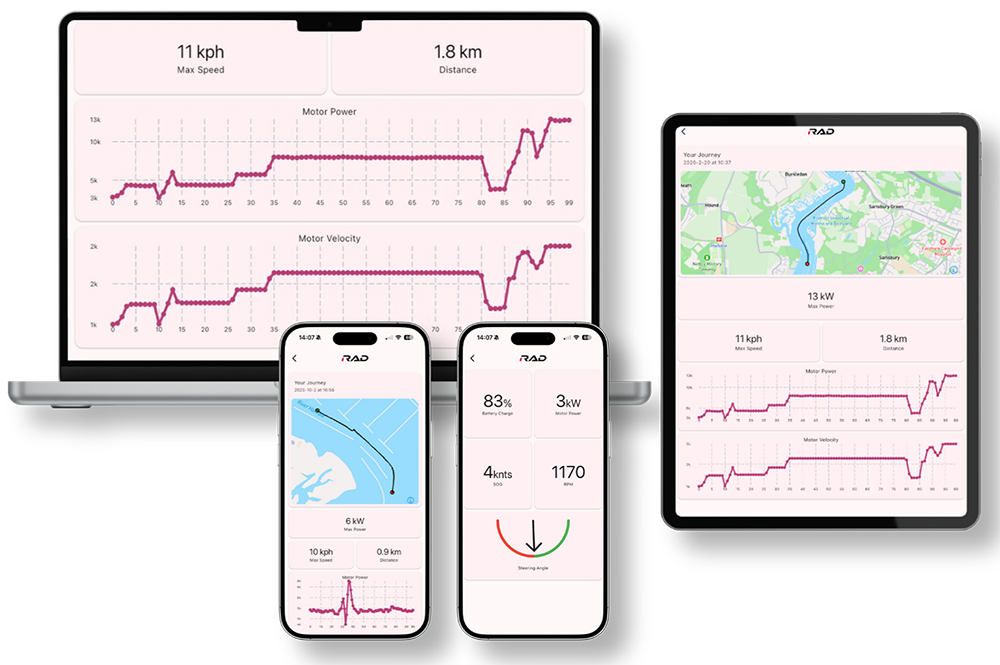
| RAD Axon Open vessel systems architecture. Connects all vessel systems through common digital infrastructure. Software-agnostic – any autonomy provider integrates through standard open interfaces. | Autonomy Core Axon compatible autopilot with onboard computer. Hosts open-source and proprietary autonomy software. MAVLink-native. RAD supports customers across the full range of autonomy software options. | RAD Insights Cloud analytics, live telemetry, and mission replay for operators and programme managers. |
The regulatory picture
In May 2026, the International Maritime Organisation (IMO) adopted the first International Code of Safety for Maritime Autonomous Surface Ships, known as the MASS Code. This followed nearly a decade of discussions, legal work and on-the-water trials.
The MASS Code came into effect on 1 July 2026. For now, it’s voluntary, running for at least two years before it becomes mandatory. It will eventually be folded into the International Convention for the Safety of Life at Sea (SOLAS), the treaty that sets global safety standards for ships.
The Code defines four levels of autonomy, from systems that support an onboard crew through to fully autonomous vessels making independent decisions. It also introduces Remote Operations Centres (ROCs). The ship’s master keeps overall responsibility even when not physically on board.
A mandatory version of the MASS Code is expected by 1 July 2030, coming into force on 1 January 2032 through new SOLAS rules. Right now, the Code applies to cargo ships. How it extends to passenger vessels and smaller commercial USVs is still to be confirmed.
UK regulation: the MCA’s approach
In the UK, the Maritime and Coastguard Agency (MCA) regulates autonomous vessels through a tiered system based on size:
- Vessels under 2.5 metres can operate under a general exemption
- Vessels between 2.5 and 4.5 metres have their own exemption route
- Larger autonomous vessels go through MGN 664, a certification process for vessels using innovative technology, covering reliability, situational awareness and emergency intervention
The MCA has also launched the UK Maritime Innovation Hub, giving operators a single point of contact for understanding MCA requirements and structuring safe vessel trials. The UK played a leading role in shaping the IMO’s MASS Code, having represented UK interests in the international working groups for eight years.
RAD helps operators meet current MCA and IMO requirements, and builds systems that stay regulatory ready as the rules evolve, from today’s voluntary MASS Code to the mandatory framework expected by 2032.
The IMO is developing a framework for MASS distinguishing four degrees of autonomy – from automated processes with crew on board, through to fully autonomous vessels with no remote human intervention. The UK’s Maritime and Coastguard Agency (MCA) has published guidance for trialling autonomous vessels in UK waters, and several maritime nations are developing their own regulatory pathways.
RAD works with operators to ensure their platforms meet current MCA and international requirements and designs systems to be regulatory ready as frameworks continue to mature.
Why is the USV market growing so quickly?
| $928m Global USV market value, 2024 | $2.5bn+ Projected market value, 2032 |
Source: Verified Market Research, “Unmanned Surface Vehicle (USV) Market Size, Share & Forecast,” 2025.
The USV market is growing due to increasing demand for safer, lower-cost and more efficient maritime operations. Advances in autonomy, communications technology and sensor systems are making USVs practical for a wider range of commercial and defence applications.
- Cost pressure – crew salaries, welfare, vessel size, rotations, and logistics simply don’t exist for uncrewed platforms.
- Risk reduction – removing crew from mine clearance, storm monitoring, and hostile proximity is a compelling argument in defence and certain commercial operations.
- Sensor miniaturisation – cameras, radar, lidar, and GPS have become much smaller and cheaper, making it possible to build USVs on a wider range of vessel sizes.
- Communications infrastructure – Low Earth Orbit (LEO) satellite networks, such as Starlink, now provide fast, reliable internet connections to vessels at sea, even when they are far from shore.
- Regulatory progress – as frameworks develop and early deployments accumulate safety records; operators are committing to larger USV programmes.
How RAD supports USV programmes
RAD Axon gives USV programmes the open vessel systems architecture they need to move faster and stay flexible – across electric and conventional propulsion platforms, and with any autonomy software stack. Autonomy Core adds a proven autopilot and onboard compute layer, with RAD’s support across the full range of autonomy software options available in the market.
We have deployed systems on open-ocean monitoring vessels, fast RIB platforms, survey boats, and military demonstrators. Our multidisciplinary team, spanning mechanical, electrical, electronics, software, and systems engineering, brings decades of experience from some of the world’s most advanced autonomous marine programmes.
Whether you’re building a new platform, integrating a new autonomy stack, or looking to escape vendor lock-in on an existing fleet, the RAD team would welcome the conversation.
Frequently asked questions
What does USV stand for?
USV stands for uncrewed surface vessel (or Unmanned Surface Vehicle – the terms are interchangeable). It refers to a waterborne craft that operates on the surface without a human crew required physically on board, either under remote human control or autonomously.
What are the benefits of a USV?
The main benefits of a USV include reduced operating costs, improved safety, increased mission endurance, lower environmental impact and the ability to perform tasks in hazardous or remote locations without risking human life.
Are USVs autonomous?
Some USVs are fully autonomous, while others are remotely operated or use a combination of autonomous navigation and human supervision. The level of autonomy depends on the vessel design, mission requirements and regulatory constraints.
How big is a USV?
USVs range from small platforms under two metres used for harbour survey and environmental monitoring, to vessels over 15 metres used for offshore inspection, defence patrol, and ocean research. The right size depends on mission, required endurance, and payload weight.
How far can a USV travel?
Range depends on propulsion type and capacity. Electric USVs optimised for survey work typically operate for 8–12 hours on a single charge in calm conditions. Diesel or hybrid platforms can sustain missions of several days or weeks. Satellite communications now allow USVs to operate at virtually unlimited range from the control station.
Are USVs legal to operate in UK waters?
Yes, the UK’s MCA has published guidance for trialling and operating autonomous vessels in UK waters. Operators must comply with the Merchant Shipping Act, COLREGS, and any conditions set by the MCA for their operating area. RAD works with operators to ensure platforms meet current requirements.
What is the difference between a USV and a drone boat?
They refer to the same type of platform. ‘Drone boat’ and ‘maritime drone’ are informal media terms. ‘Uncrewed surface vessel’, ‘unmanned surface vehicle’, and ‘autonomous surface vessel’ are the technical and regulatory terms used by engineers, naval architects, and maritime authorities.
Can a USV operate in rough seas?
Yes, though sea state tolerance varies by platform size and design. Larger USVs are engineered to operate in sea state 4-5 and above. Smaller survey platforms are typically limited to sea state 3. RAD Axon’s vessel systems layer plays a critical role in rough-water performance – managing propulsion response, maintaining heading, and switching to safe modes when conditions exceed the vessel’s operating envelope.
What propulsion does a USV use?
USVs can use electric, diesel, petrol, hybrid or hydrogen propulsion systems. The choice depends on factors such as mission duration, range requirements, operating environment and sustainability goals.
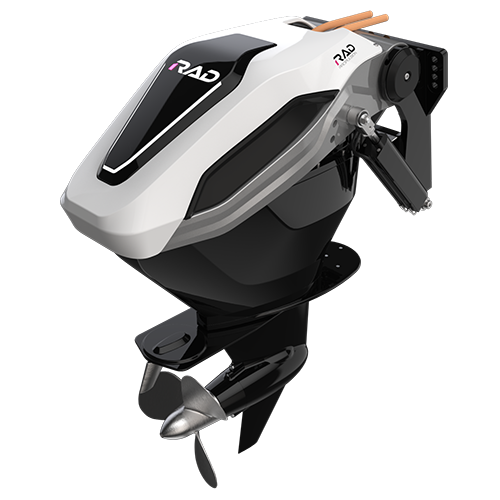
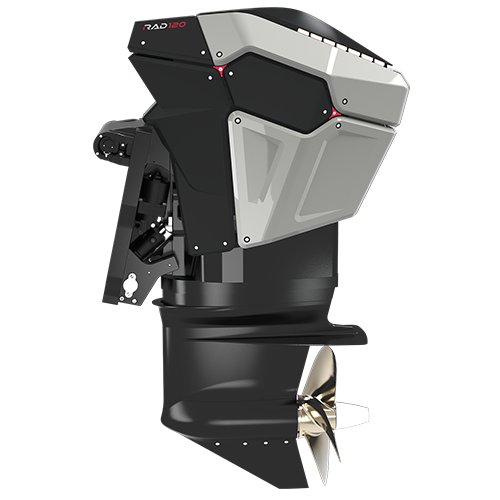
Electric propulsion is increasingly common for survey, monitoring, and harbour security due to low noise, zero emissions, and reduced maintenance. RAD Axon is propulsion-agnostic, its open architecture integrates with any drive type, including RAD’s own electric outboard systems.
Talk to the RAD team
RAD Axon – build faster, integrate easier, retain freedom of choice throughout the life of your fleet.


